
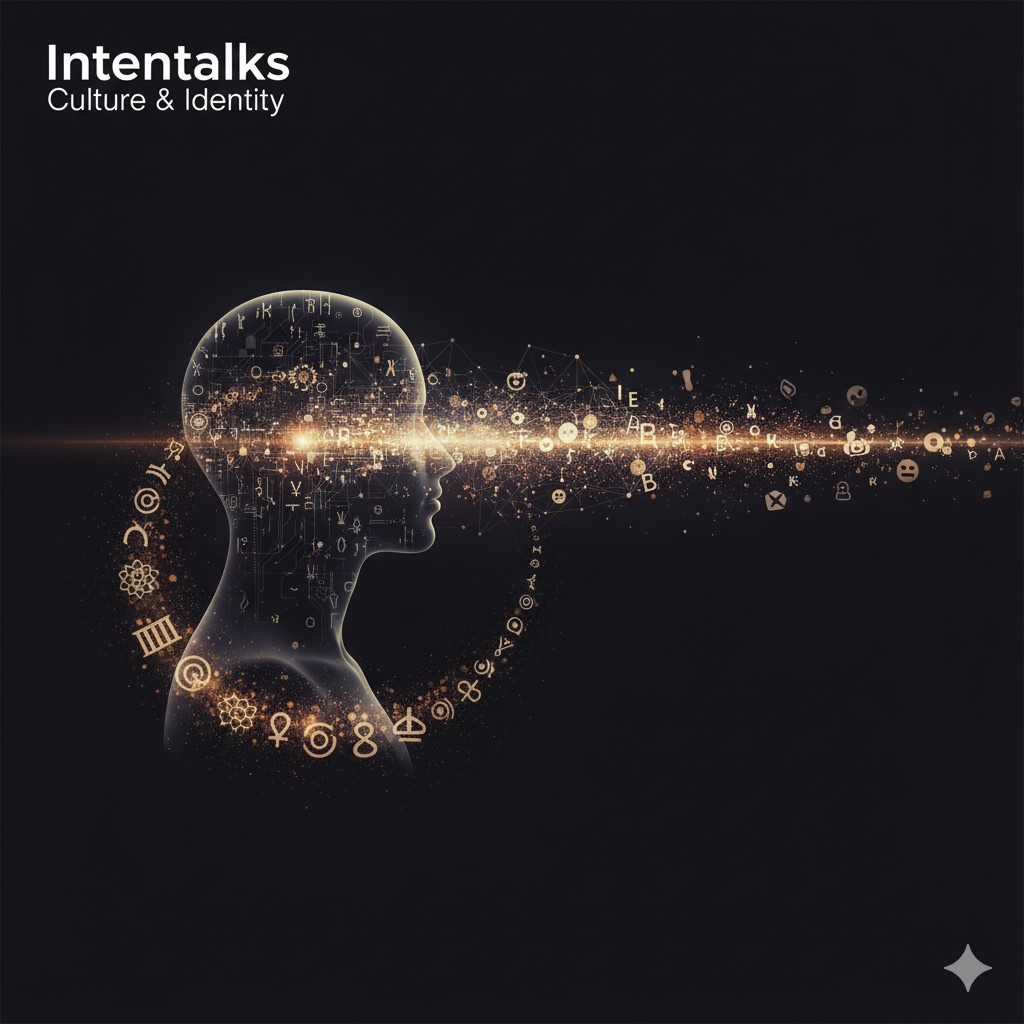
Culture has always moved through time. Traditions formed slowly, carried by memory, ritual, and repetition. Change occurred across generations, shaped by geography, institutions, and shared experience.
Today, culture moves through timelines.
Instant sharing has collapsed the distance between creation and circulation. A gesture, phrase, image, or belief can travel globally in seconds. Cultural meaning is no longer preserved through continuity alone — it is produced through visibility.
When Transmission Becomes Acceleration
Traditionally, culture was transmitted.
Stories were told, customs were practiced, values were inherited. Transmission required presence and time. Meaning deepened through repetition and context.
Digital platforms replace transmission with acceleration. Content does not need to be understood to be shared. It needs only to be engaging. As a result, cultural elements circulate faster than they can be interpreted.
Speed reshapes meaning.
The Compression of Context
Cultural expressions once carried layered histories.
Symbols, rituals, and narratives were embedded in specific social and historical contexts. Online, these contexts dissolve. A symbol becomes an image. A practice becomes a trend. A belief becomes a caption.
What remains is form without depth.
This does not eliminate meaning, but it fragments it. Interpretation becomes optional, while replication becomes central.
The Rise of Participatory Culture
Instant sharing democratizes cultural creation.
Anyone can remix, reinterpret, and redistribute. Authority shifts from institutions to networks. Culture becomes participatory, fluid, and responsive.
But participation is not neutral. Algorithms reward formats that perform well, not those that endure. Cultural expressions adapt to platform logic — becoming shorter, more visual, more reactive.
Expression is shaped by what travels farthest.
Tradition as Content
In the age of timelines, tradition becomes material.
Cultural practices are aestheticized, packaged, and consumed outside their original communities. Rituals turn into visuals. Heritage turns into hashtags.
This visibility can preserve traditions — or flatten them. What is gained in reach is often lost in intimacy.
Culture survives, but in altered form.
Identity in Motion
Cultural identity becomes dynamic and negotiable.
People adopt, discard, and combine cultural elements across borders and histories. Belonging is less inherited and more curated. Identity is expressed publicly and revised continuously.
This fluidity expands possibility, but it also destabilizes continuity. Without shared reference points, culture risks becoming a sequence of moments rather than a shared narrative.
The Timeline as Cultural Filter
Timelines do not reflect culture equally.
They privilege novelty over endurance, emotion over explanation, and visibility over significance. What appears culturally dominant is often what is most algorithmically compatible.
Quiet practices disappear. Slow traditions fade. Not because they lack value — but because they resist compression.
Meaning Beyond the Feed
Cultural evolution is not inherently shallow.
The challenge lies in preserving depth within speed. Culture needs spaces that allow pause, interpretation, and memory — spaces where meaning can mature rather than perform.
Tradition does not need to disappear. It needs room to breathe outside the timeline.
What Culture Becomes Next
Culture has always adapted to its mediums.
Print shaped ideology. Broadcast shaped mass culture. Digital timelines shape fragmentation and immediacy.
The future of culture will depend not on how fast it spreads, but on how consciously it is engaged.
Because culture is not what goes viral —
it is what remains meaningful once the feed moves on.