
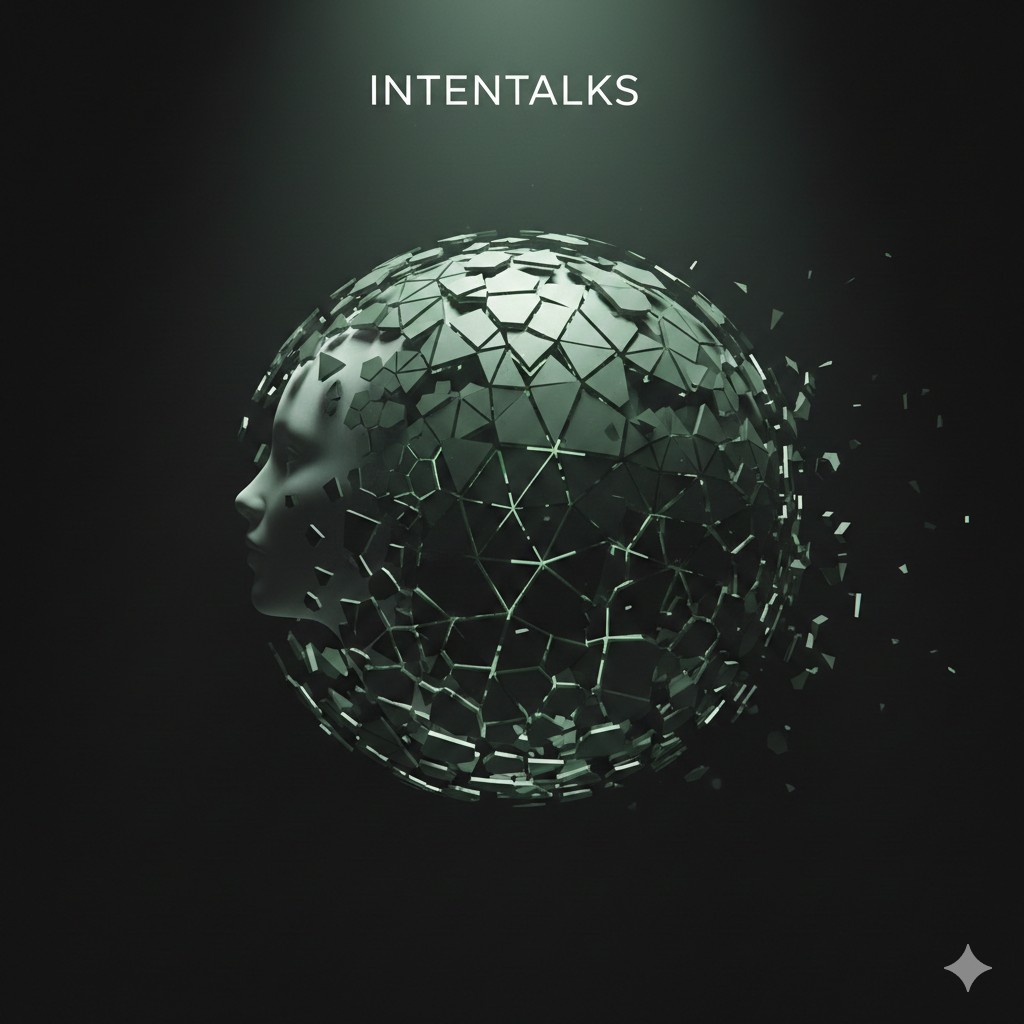
Not long ago, major global events created a shared sense of reality. Wars, elections, pandemics, economic crises — while interpretations differed, people largely agreed on what was happening. Today, that shared foundation is eroding.
The same event can now produce radically different narratives, emotions, and conclusions — not across countries, but within the same society. Reality itself has become fragmented.
The End of a Common Narrative
Mass media once acted as a central reference point. A limited number of newspapers, television networks, and broadcasters filtered information and established a common frame of understanding. This system had flaws, but it created a shared informational baseline.
Digital platforms dismantled that structure.
Today, information flows through personalized feeds shaped by algorithms, engagement metrics, and individual behavior. News is no longer something we collectively receive — it is something we individually experience. Two people can follow the same global event and emerge with entirely different understandings of what occurred.
Algorithms Don’t Divide — They Optimize
Fragmentation is often blamed on polarization or misinformation, but the deeper force is optimization.
Platforms are designed to maximize attention, not consensus. Algorithms learn what keeps each user engaged and continuously refine content to reinforce those patterns. Over time, this creates self-contained information environments — not echo chambers by intention, but by efficiency.
The result is not simply disagreement, but parallel realities. Facts are filtered, context is reshaped, and meaning is selectively amplified or suppressed based on predicted engagement.
Speed Over Sense-Making
Global events now unfold in real time, and interpretation races alongside them.
Breaking news alerts arrive before facts are verified. Commentary precedes understanding. Emotional reactions spread faster than analysis. In this environment, narratives solidify quickly — often before there is enough information to justify them.
Once formed, these narratives are rarely revised. Corrections travel slower than outrage. Complexity loses to clarity, even when clarity is misleading.
Identity Shapes Interpretation
In a fragmented information landscape, identity becomes a primary lens.
Political affiliation, cultural background, generational experience, and digital subcultures increasingly determine which version of reality feels credible. Events are no longer evaluated on evidence alone, but on whether they align with existing worldviews.
This doesn’t mean people are irrational. It means that in the absence of shared context, trust shifts inward — toward familiar narratives, communities, and sources that feel aligned with one’s identity.
The Cost of Fragmentation
When reality fractures, collective action becomes difficult.
If societies cannot agree on what is happening, they struggle to agree on what should be done. Policy debates turn into narrative battles. Global cooperation weakens. Even basic concepts — truth, responsibility, harm — become contested.
The danger is not disagreement, but disconnection. A world without shared reality risks becoming a world without shared solutions.
Rebuilding Context, Not Consensus
The answer is not returning to centralized media or enforcing uniform narratives. Nor is it silencing dissenting voices. Fragmentation is a structural outcome of modern information systems, and it cannot be reversed by nostalgia.
What can be rebuilt is context.
Context slows information down. It connects events to history, systems, and consequences. It acknowledges uncertainty instead of hiding it. It allows multiple perspectives without collapsing into relativism.
Shared reality does not require shared opinions — it requires shared reference points.
Why This Matters Now
Global challenges — climate change, geopolitical instability, technological disruption — demand coordinated understanding. Without it, societies react instead of respond, divide instead of adapt.
In a fragmented world, the most valuable resource is not information, but interpretation.
Because the future will not be shaped by how fast news travels —
but by how well we understand what it truly means.